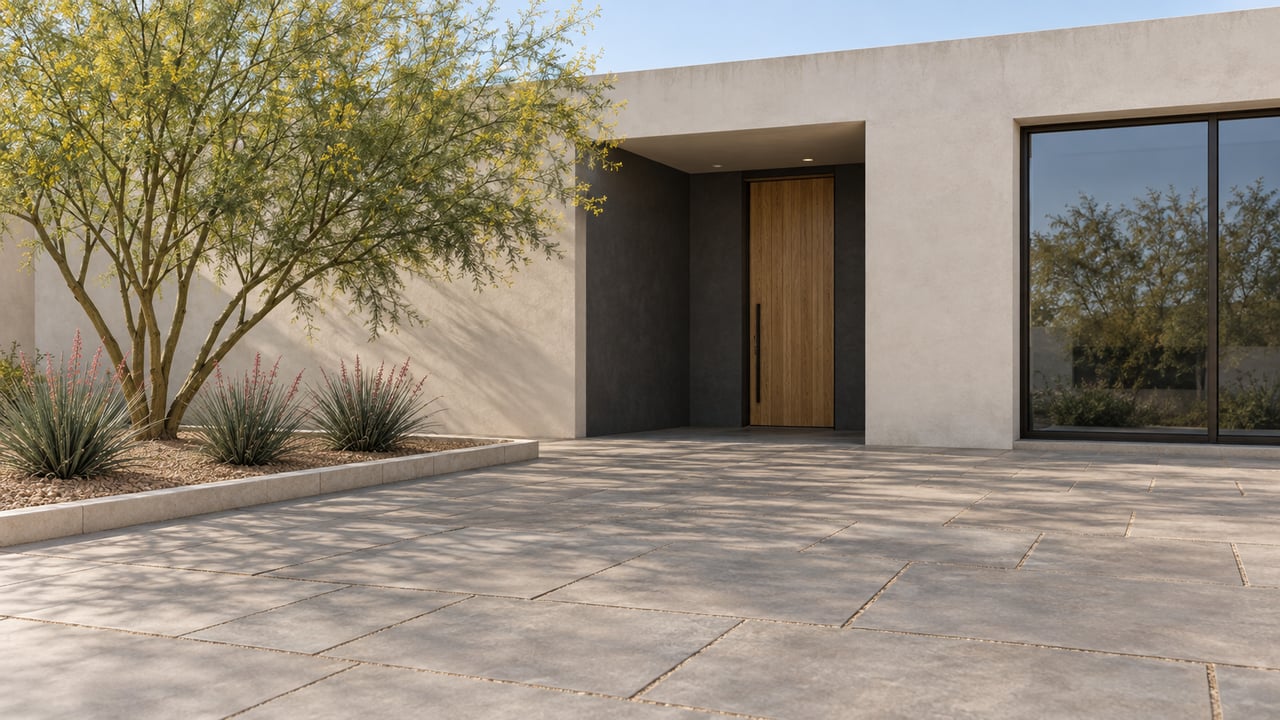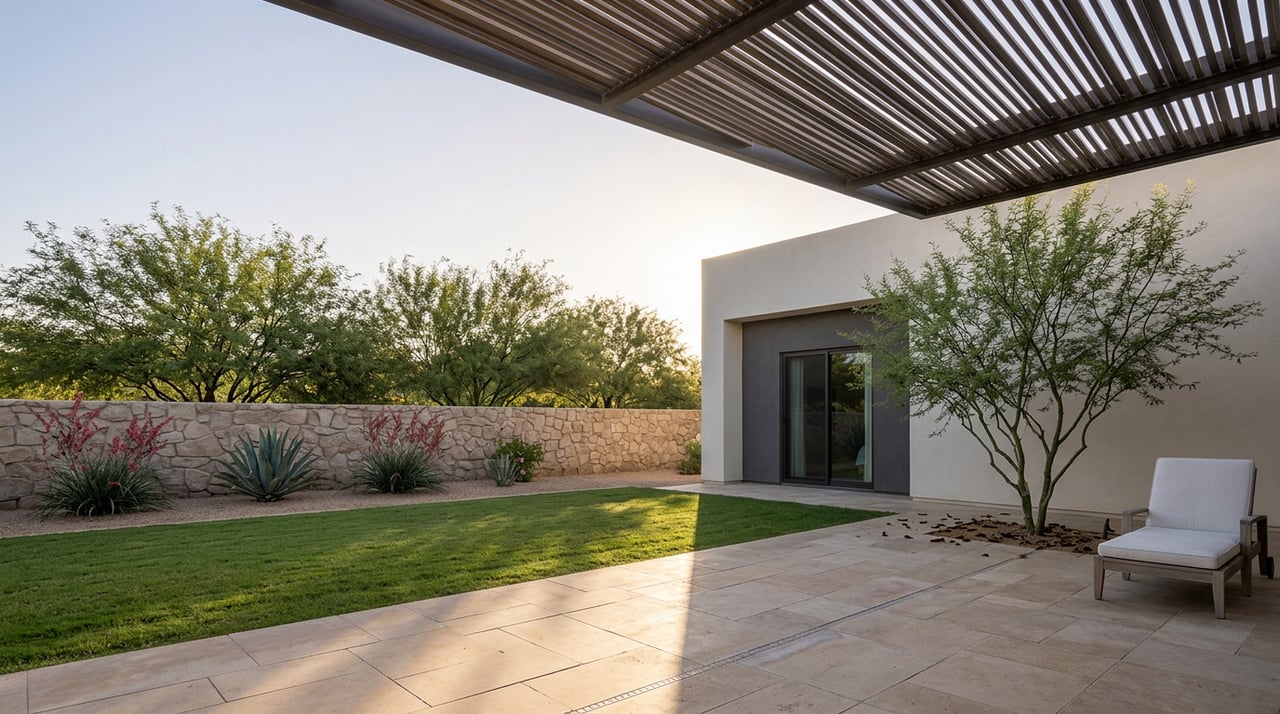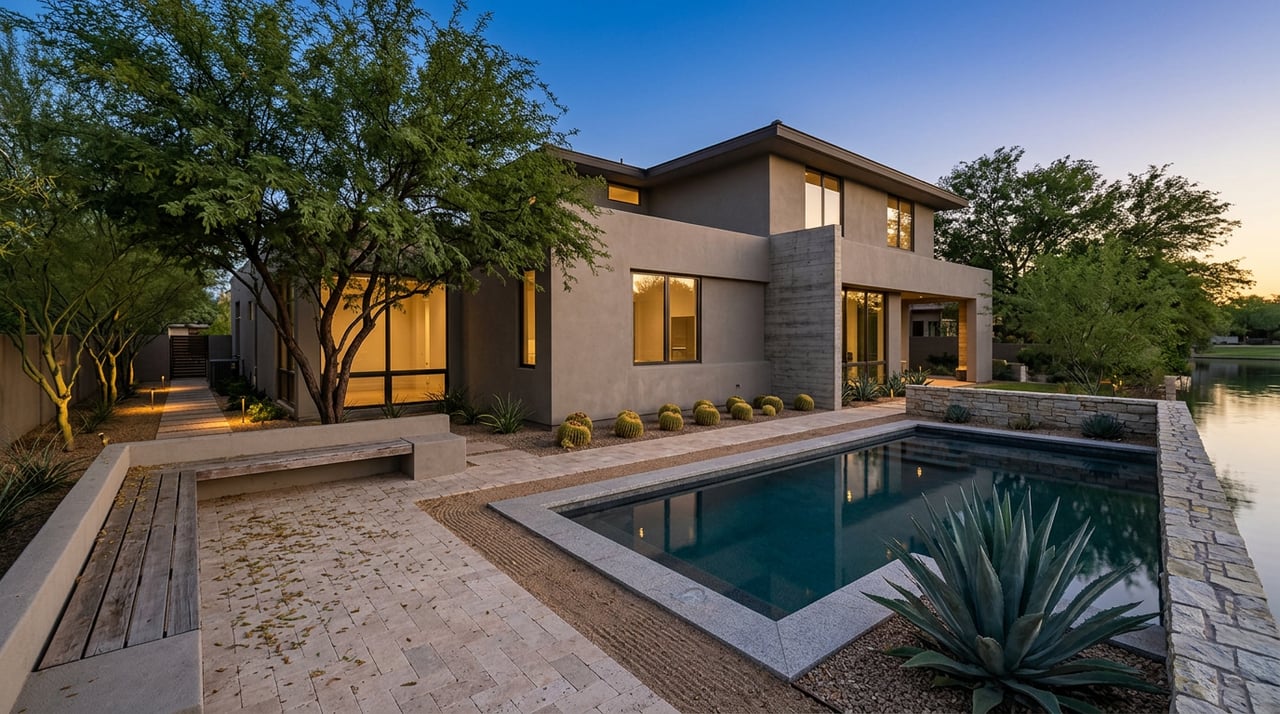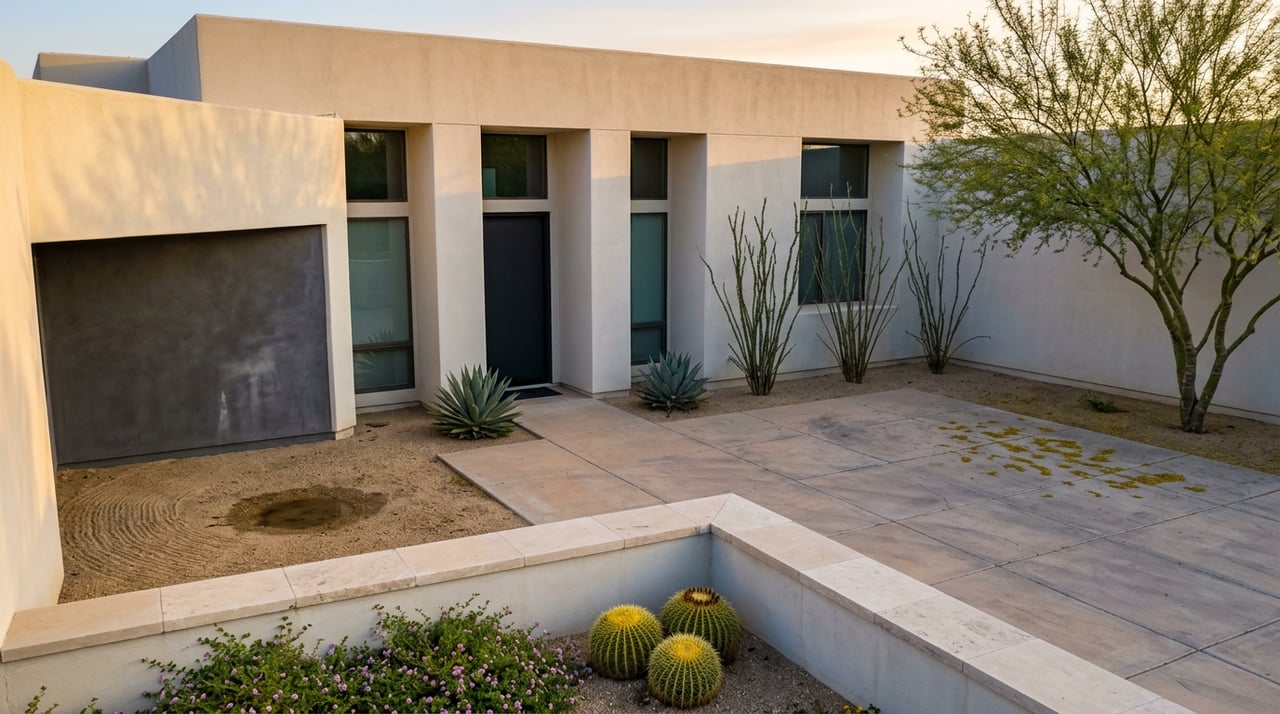
Drive the perimeter of Section 10 and you will not pass a clubhouse, a restaurant, a dog park, or a single storefront. The listings brag about half-acre lots and custom architecture, and they are right to. What they never mention is a shared amenity, because there isn't one inside the four streets that define this pocket of west Las Vegas. That absence is not a flaw in the neighborhood. It is the whole story of how the neighborhood actually functions, and almost nobody who writes about Section 10 says so directly.
One Square Mile, No Front Door
Section 10 sits on exactly one square mile, bordered by Sahara Avenue to the north, Desert Inn Road to the south, Buffalo Drive to the west, and Rainbow Boulevard to the east. Every home inside those lines sits on at least a half acre, some on several acres, and no two look alike. Most of the neighborhood carries no association fee at all, with the exception of a handful of gated cul-de-sacs tucked inside the larger grid.
That structure is unusual for Las Vegas, where new construction has spent three decades shrinking lots and stacking homes closer together. Section 10 grew the opposite way, parcel by parcel over several decades rather than as a single master-planned release, which is why the street-by-street feel changes so much as you drive through it. A Mediterranean two-story on one block gives way to a low contemporary rebuild on the next, and the only constant is the yard.
What Section 10 never built, by design or by circumstance, is a center. No clubhouse. No corner market. No shared green space large enough to gather a block party. Residents here did not lose an amenity package when they bought in. They bought into a neighborhood that outsources its social infrastructure to whatever sits just outside its own boundary lines, and that arrangement has held for decades without anyone needing to fix it.
The Country Club Less Than Two Miles Away
One of the closer country clubs to Section 10 is Canyon Gate, less than two miles away by most local accounts. Canyon Gate is private, built primarily between 1985 and 1995 around a Ted Robinson Sr. championship course that stretches to 6,769 yards across 160 acres of fairway, waterfall, and lagoon.
Membership is not required to live near it, and plenty of Section 10 households never join. But for the ones who do, the club runs on a weekly rhythm that outsiders rarely see written down anywhere:
- Monday, Wednesday, and Friday mornings, Pilates instructor Jillian Potashnick teaches a mat class in the Canyon Gate gym, a program she has run since 2008.
- Friday mornings bring Men's Play from the gold or blue tees, no handicaps required, followed by what the club calls a Post-Game Gathering in the grill.
- Wednesday and Friday afternoons at 3 p.m., the club opens Par-Tee Hour, with three-dollar draft beers, four-dollar house wines, five-dollar well cocktails, and a spread that runs from house-made hummus to chicken wings.
None of that shows up on a Section 10 listing sheet. It doesn't need to. It is simply where a meaningful slice of the neighborhood's social calendar lives, two miles from home rather than zero.
The half acre out back is private. The Wednesday happy hour is not.
Green Space That Isn't Inside the Gates
For families who want a park rather than a golf membership, the closest options sit along the same western edge, at All-American Park, Rainbow Family Park, and Old Spanish Trail Park. Rainbow Family Park in particular has become a fixture for the west side, with a splash pad, baseball fields, a walking trail, and a small obstacle-course style path that kids gravitate toward on repeat visits.
The city runs its splash pad season from May 1 through September 30 each year, which means as of this week there are still a few weeks of water play left before the pads shut off for the season. It is a small, seasonal detail, but it is the kind of thing a resident checks before loading the car on a Saturday morning, not something a general neighborhood guide usually bothers to note.
None of these parks sit inside Section 10's own boundary. All of them function as if they did, because the alternative is a private backyard and nothing else.
The Retail Block Section 10 Borrowed
For dinner, coffee, or a Saturday afternoon that doesn't involve a car ride to the Strip, Section 10 households lean on Tivoli Village and Boca Park, both a short drive up toward Rampart Boulevard and the edge of Summerlin. Neither center technically belongs to the neighborhood. Both have become its de facto downtown.
Tivoli Village opened its first phase in 2011 as a European-style outdoor retail and dining project, and the restaurant lineup that took root there has proven more durable than the shopping. Leone Cafe was one of the original tenants and has stayed put while storefronts around it have turned over more than once. Echo & Rig Butcher and Steakhouse, opened by chef Sam Marvin, pairs a working butcher counter with the dining room, a format that is still uncommon in Las Vegas. El Dorado Cantina has been named Best Mexican Restaurant in Las Vegas multiple years running in the Las Vegas Review-Journal's Best of Las Vegas poll. Hop Nuts Brewing has run a small taproom on Tivoli's western end since 2019, seating around two dozen people at a curved bar with a dozen or more beers on tap and no kitchen of its own, which sends its regulars wandering next door for food between rounds.
A few minutes away, Boca Park handles the more practical half of the rotation, the errands and the reliable dinner reservation, anchored by names like Fleming's Prime Steakhouse and Kona Grill. Together the two centers form the kind of walkable, repeat-visit commercial strip that Section 10 itself was never built to contain.
What's Rising on the Vacant Lot
If you have driven along Rampart Boulevard near Alta Drive recently, you have likely noticed the empty parcel wedged between Tivoli Village and the Angel Park golf course, the one that has sat undeveloped for years while everything around it filled in. According to Las Vegas Review-Journal reporting, that lot is now backed by forty million dollars in new financing for a 300-unit rental apartment complex.
It is not a change inside Section 10's boundary, and it is not framed here as an investment signal. It matters for a simpler reason: it is one more sign that the corridor Section 10 residents already treat as their own front yard keeps adding rooftops and reasons to stay. More people living within walking distance of Echo & Rig and the Hop Nuts taproom generally means those places stay full, not empty, which is its own kind of neighborhood stability.
The Boundary Was Always a Formality
Zoom out and the pattern is consistent. Section 10 was drawn as a square mile of custom lots with almost no shared infrastructure, and in the decades since, it has quietly annexed a country club, three parks, and a two-center retail strip that all sit just outside its official lines. None of it required a vote or a developer's master plan. It happened because half-acre lots and privacy were the point of buying here in the first place, and everything else, the golf, the splash pad, the steakhouse with its own butcher counter, was always going to come from somewhere else.
That is not a compromise. It is closer to the actual definition of the neighborhood, boundary lines aside.
If Section 10's particular mix of privacy and borrowed amenities ever turns into a real question about buying or selling here, Russell Arnold works this stretch of the west valley regularly and can walk you through what the boundary lines don't show. Request a Private Consultation & Home Valuation whenever the timing is right.